May 22, 2026
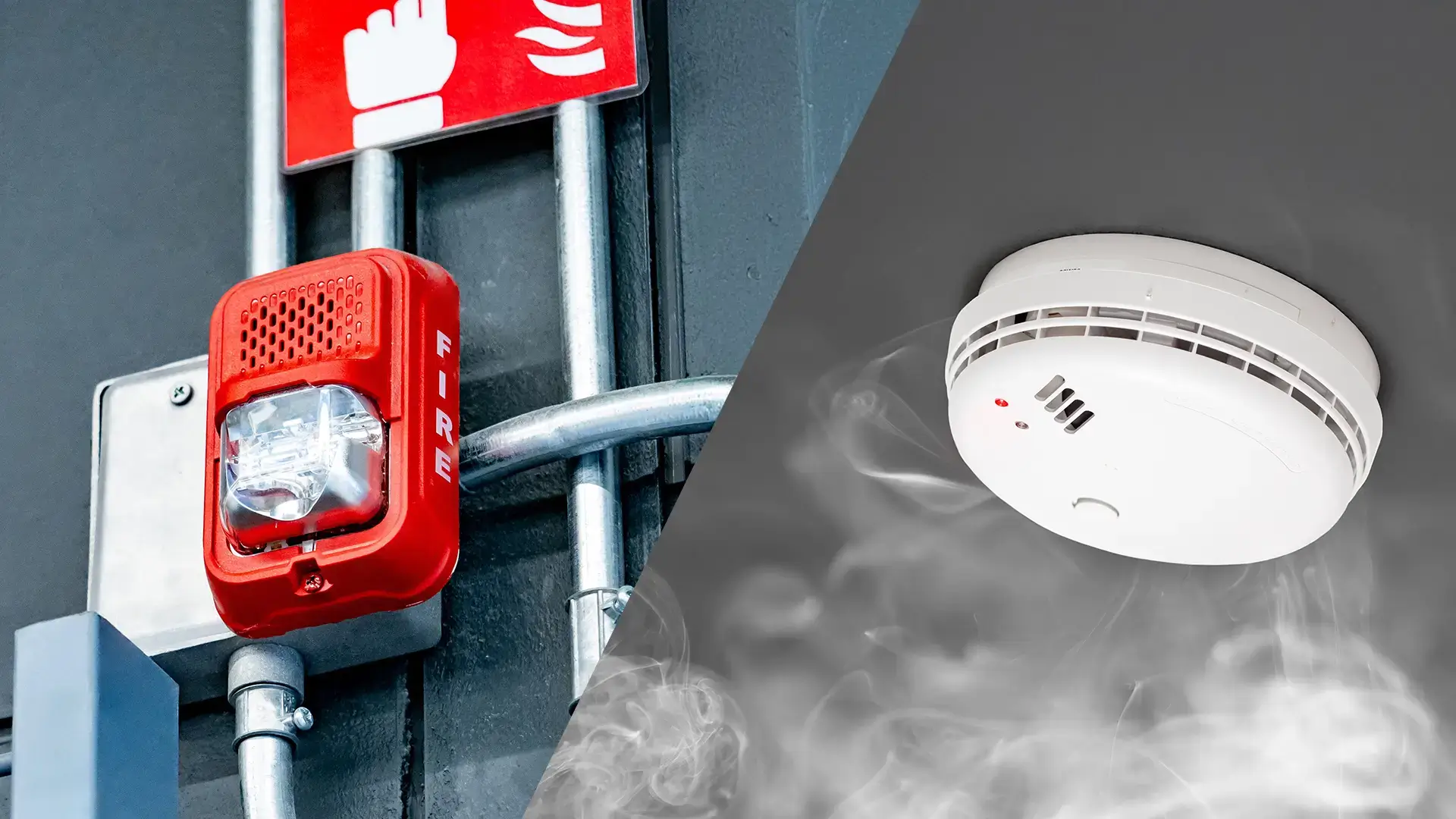
Most people use “fire alarm” and “smoke detector” as if they mean the same thing. In everyday conversation, that is usually fine. But for a home, a workplace, or a building inspection, the difference matters because these devices play different roles.
Quick Answer
A smoke detector senses smoke. A fire alarm system alerts people when smoke, heat, sprinkler waterflow, or another fire signal is detected. In many homes, detection and alerting are combined in one device. In many businesses, they are part of a larger system with a control panel, notification devices, and sometimes monitoring.
What Is a Smoke Detector?
A smoke detector is the sensing part of fire protection. Its job is to detect smoke particles in the air and send a signal. Depending on the setup, that signal may trigger a local alarm, activate interconnected devices, or report to a fire alarm control panel.
It also helps to clear up one common point of confusion. In homes, people often say “smoke detector” when they really mean “smoke alarm.” A smoke alarm is typically a combined unit that detects smoke and sounds the alert from the same device.
Quick Takeaway
Smoke detectors focus on sensing. The alert depends on how the system is set up.
What Is a Fire Alarm?
A fire alarm is the part that alerts people and coordinates what happens next after a fire condition is detected. In a home, that might be a single ceiling unit that detects smoke and sounds an alarm. In many commercial buildings, it is a connected system made up of multiple devices that report to a control panel.
A fire alarm system can include:
- A control panel that receives signals and triggers building-wide alerts
- Smoke detectors and heat detectors
- Manual pull stations
- Horns, speakers, and strobes to notify occupants
- Connections that monitor sprinkler waterflow or other suppression systems
- Monitoring that can transmit signals based on the building setup
Quick Takeaway
A fire alarm system is built to notify occupants throughout the building and support a coordinated response.
Fire Alarm vs Smoke Detector: The Simple Difference
The difference between the two can be confusing because in some settings, they are combined into one device. The easiest way to understand what sets a fire alarm and a smoke detector apart is to think about what happens after smoke is detected.
A Smoke Detector Sends the Signal
In many commercial setups, a smoke detector does not make noise. It sends a silent signal to the fire alarm control panel. That signal is the system being told, “Smoke was detected here.”
A Fire Alarm Receives the Signal and Sounds the Alert
Once the panel receives the signal, the system can alert people throughout the building. That usually means horns or speakers sound, strobes flash, and the panel shows the location or zone where the alarm started. Depending on the building, the system may also transmit the signal to monitoring.
In a Home, One Device Often Does Both Jobs
Many people call a ceiling unit a “smoke detector,” but what they have is usually a smoke alarm. That is a single device that detects smoke and sounds the alarm from the same unit. If the home has interconnected alarms, one device can trigger the others to sound too.
In a Business, You Can Often See the Parts as Separate Devices
In many commercial buildings, smoke detectors are small, low-profile devices mounted on ceilings. Notification devices are often mounted on walls and are easy to spot because they include a strobe light. You will also typically see manual pull stations near exits, and the fire alarm control panel is usually located in a utility area or near an entrance.
Quick Takeaway
A smoke detector is the sensor. A fire alarm system is what alerts the building and coordinates the response.
Why The Difference Matters In A Business
For a home, a smoke alarm may be enough for basic protection. In a business, the questions are usually bigger because you are protecting more people, more space, and often a building with specific code requirements.
Building Requirements Are Often System-Based
Many businesses cannot rely on standalone smoke alarms alone. Depending on occupancy type and local code enforcement, your building may need a fire alarm system with a control panel, notification devices, and specific documentation.
Notification Needs Are Different
In a workplace, the goal is not only detection. It is making sure occupants are clearly alerted throughout the building, including areas where people might not hear a single device. That is why commercial systems often use horns, strobes, or speakers placed strategically throughout the facility.
Testing, Documentation, And Monitoring Matter
Commercial systems are typically inspected and tested at defined intervals, with records needed for inspections and often for insurance purposes. Some buildings also use monitoring so certain signals can be handled quickly when the building is closed or unoccupied.
If you manage a business and you are unsure what your building requires, your local AHJ is the final authority. A fire protection company can help you understand what is in place, what is required, and what needs attention before the next inspection.
How Fire Alarm Systems Work With Other Fire Protection Systems
In many commercial buildings, the fire alarm system works alongside other safety systems so the building responds as a whole.
Common examples include:
Fire Sprinkler Systems: Sprinkler heads typically activate from heat, not from a fire alarm signal. However, the fire alarm system can monitor sprinkler waterflow and supervisory conditions, then trigger building notification when waterflow is detected.
Restaurant Fire Suppression Systems: In commercial kitchens, hood suppression systems can be tied into the fire alarm so that activation triggers a clear building notification.
Doors, Elevators, and HVAC Equipment: Some systems are configured to release magnetic door holds so fire doors close, recall elevators to a designated floor, or shut down certain air handling equipment to help limit smoke movement. Exact functions vary by building and requirements.
Monitoring and Emergency Response: When a system is monitored, certain signals can be transmitted to a supervising station to support faster response, especially after hours.
Quick Takeaway
In commercial settings, the fire alarm is often part of a larger life safety setup, not a standalone device.
Do You Need A Smoke Detector Or Fire Alarm System?
For most people, this comes down to the type of building and what you are trying to protect. A home setup and a commercial setup can look very different, even though both are meant to alert people early.
For Homes
In many homes, the right starting point is properly placed smoke alarms that are working and up to date.
A good home checklist includes:
- Smoke alarms on every level and near sleeping areas
- Working batteries and regular testing
- Replacement when units reach the manufacturer’s recommended lifespan
- Interconnected alarms, if your home supports them, so one alarm can alert the whole home
If you are unsure what you have, check the label on the back. It will usually tell you the type and age, plus whether it is battery-powered or hardwired.
For Businesses
For a business, the question is rarely a simple device choice. Many commercial buildings need a fire alarm system that includes a control panel, notification devices, and documentation tied to inspections and ongoing testing. Requirements depend on the building type, occupancy, and what your local AHJ expects.
A business is more likely to need a full system when:
- The building has multiple suites, floors, or high-traffic areas
- Occupants need clear notification throughout the space
- Routine testing and documentation are required
- The building includes sprinklers or other connected fire protection equipment
If you are not sure what your building requires, that is common. A good first step is confirming what is installed and whether it is being tested and documented the way it should be.
Not Sure What Your Building Needs?
If you want to confirm what your system is designed to do and whether it is working the way it should, a quick review can help. B&C Fire Safety serves the Florida Panhandle and the Alabama Gulf Coast with comprehensive fire alarm solutions, and our team is ready to help when you need us.